Management

Spinal Cord Injury: Treatment and Rehabilitation

Choose a preferred language

Treatment of a spinal cord injury starts at the place of the accident. It continues in the emergency room (ER). The injured person will then be admitted to the hospital. Or they will be moved to a spinal cord injury treatment center. 


Treatment

First, the injury is stabilized. This is done with surgery, bracing, or both. These procedures can be vital in treating spinal cord injury:

  • Relief of pressure on the spine. This is done using surgery or traction. Traction is a mechanical system of using weights to relieve pressure on the nerves.

  • Treatment to stabilize the spine. Screws, metal plates, and other devices may be placed during surgery to stabilize the injury. In some cases, traction or a brace may be used instead.


Rehabilitation

After the injury is stable, supportive care and rehabilitation (rehab) are the goals. Supportive care helps prevent other health problems. Health problems may include skin sores. Rehab supports a person’s emotional and physical recovery. A few members of the rehab team include:

  • Physical therapy (PT). This supports strength and movement in muscles and joints. It may help some people with spinal cord injury regain some function.

  • Occupational therapy (OT). This helps people regain their ability to take care of themselves. It involves feeding, dressing, and bathing.

  • Counseling. Spinal cord injury can have lifelong (permanent) effects. Counseling helps the injured person and their family cope and adjust.
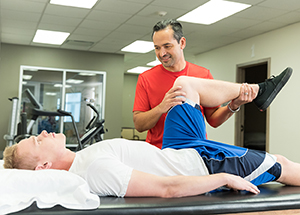
    Man lying on back on table. Healthcare provider is raising one of his legs.


Outlook for the future

It was once believed that damaged nerve cells couldn’t be repaired. But recent studies show this may not be true. Now, scientists are searching for ways to regrow injured nerves. The outlook for people with spinal cord injury is better today than ever before.


© 2000-2026 The StayWell Company, LLC. All rights reserved. This information is not intended as a substitute for professional medical care. Always follow your healthcare professional's instructions.

Start your journey toward better health

Select a primary care physician who will deliver personal care, close to home.

Find a Doctor

We have more than 4,500 specialty care physicians in our network

We have you covered from head (neurosurgery) to toe (podiatry.) And everything in-between!

Find a Doctor

Need Help?

Get the right care at the right time.

Learn More
Related Articles
Read article
Brain Health
Anxiety and Traumatic Brain Injury (TBI)

Dealing with anxiety is a common symptom of a traumatic brain injury. But when fear and worry become so strong that they get in the way of your ability to live your life, you could have an anxiety disorder. Read on to learn more.

Read article
Brain Health
Problems with the Senses After Brain Injury

Sometimes an injury damages the part of the brain that controls balance, sight, or hearing. Or memory loss may keep a person from remembering certain sights, sounds, smells, or tastes. Some people have trouble handling abstract ideas, like time, or they may simply lose track of what they are doing.

Read article
Brain Health
Spinal Cord Injury (SCI) and Pressure Injuries

A pressure injury is a sore caused by too much pressure on the skin. This reduces blood flow, damaging skin and underlying tissue. The result is a wound that can be quite serious. Having an SCI makes you more likely to develop a pressure injury.

Read article
Brain Health
Spinal Cord Injury (SCI): Managing Medicines

After spinal cord injury, you will likely have medicines as part of your treatment. These tips can help you manage them.