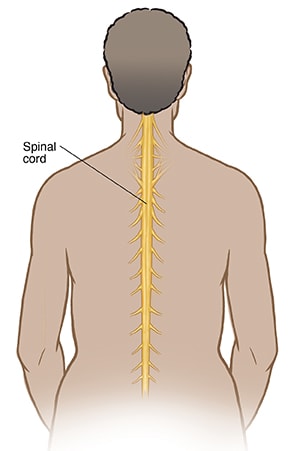
The spinal cord is a long bundle of nerve fibers and nerve cells. It goes from the base of the skull to below the waist. It is protected by the bones of your spine. The spinal cord nerves carry messages between the brain and the rest of the body. For that reason, an injury to the spinal cord is very serious. It may cause loss of feeling below the injured area (numbness). It may cause loss of the ability to move (paralysis). Emergency treatment may help prevent permanent damage. Or it may reduce the severity of the damage.
Warning
Don't move a person with a spinal injury unless you must do so to save their life. Call
What causes spinal cord injuries?
Car accidents, falls, sports injuries, and gunshot wounds cause most spinal cord damage. Electrical shock can also damage the spinal cord. Spinal cord injuries can happen to anyone.
When to go to the emergency room (ER)
A spinal cord injury is a medical emergency. For anyone with a possible injury to the back or neck, call
When the paramedics arrive
The emergency technicians will place the injured person on a hard board. They will fit a hard neck brace on their neck. They will ask basic questions, including about health history. They will give the person a physical exam. They might need to put an I.V. (intravenous catheter) in the person's arm or hand. This is to give medicines or fluids. It is important to tell them all of the medicines the injured person takes.
What to expect in the ER
The doctors and nurses caring for your loved one will act quickly. You can help by answering questions about the injury. Meanwhile, your loved one will be examined, and their breathing, heart rate, and blood pressure will be checked. Oxygen may be given through a facemask. An endotracheal tube may be placed in the throat to aid breathing. Medicines, such as steroids, may be given to reduce the amount of swelling and injury. To help find the extent of the injury, one or more tests may be done:
- Spinal X-rays. These can help reveal fracture or damage to the bones of the spine.
- CT scan. This is a detailed series of X-rays. It shows the location and extent of the damage.
- MRI. This uses strong magnets and radio waves to make clear computer images of the spine. It can show herniated disks and other problems.
- Ultrasound or direct exam. This is done to look for a swollen bladder. This is caused by urine that can't drain due to an injured spinal cord. If the bladder is swollen, a urinary catheter may be used to empty the bladder.