There is no known cure for narcolepsy, but this disorder can be managed through medicine and lifestyle changes. Work with your health care provider to create a plan that’s best for you. Getting support from your family and friends will also help you to cope with narcolepsy at home and at work.
Working with your provider
Describe your sleeping problems to your provider. Be prepared to answer questions about your health and family history. Try to keep a daily sleep diary for a couple of weeks. Record the times when you fall asleep and wake up. Also write down any symptoms you notice and what was happening just before the episode. A sleep study and daytime nap study can help diagnose narcolepsy. Your provider will prescribe the best medicine for you and will discuss any possible side effects.
Sleep study
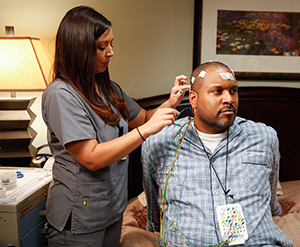
A sleep study is done at a sleep clinic. Sensors will be placed on your head and body to record your brain waves, breathing, and body movement. A small monitor that clips onto your finger will also be used to keep track of blood oxygen levels. Your sleep will be watched all night in a study called a polysomnogram. You will also have a daytime nap study called a multiple sleep latency test. The results will help your provider diagnose narcolepsy. Then your treatment can be planned.
Living with narcolepsy
Symptoms of narcolepsy often affect your daily life. But you can learn ways to cope at home, work, or school. Try these tips:
-
Teach your family and friends about narcolepsy and your special needs.
-
Join a narcolepsy support group. There, you can talk about your sleep problem. You can also share ideas about coping with your symptoms.
-
Report changes in your symptoms and any medicine side effects to your provider.
-
At work or at school, tell your employer, teacher, or school nurse about your special needs.
-
If you become drowsy when driving, pull over to a safe place to nap.
-
Discuss over-the-counter medicines that cause sleepiness with your provider.
Healthy habits
These healthy habits may help reduce your symptoms:
-
Schedule short naps during the day. Planned naps at times when you tend to feel the sleepiest can help reduce drowsiness.
-
Keep a regular sleep schedule. Go to bed and get up at the same time each day, even on weekends.
-
Exercise regularly. Exercise at least 20 minutes per day at least 4 to 5 hours before bedtime.
-
Don't have any or limit heavy meals, caffeine, nicotine, and alcohol before bed. Don’t take these for several hours before bedtime.