Being more active can help you manage your diabetes. The tips on this sheet can help you get the most from your exercise. They can also help you stay safe.
Staying active
It's important for adults to spend less time sitting and being inactive. This is especially true if you have type 2 diabetes. When you're sitting for long periods of time, get up for short sessions of light activity every 30 minutes.
Aim for at least 150 minutes a week of exercise or physical activity. That's about 30 minutes a day, 5 to 7 days a week. Don't let more than 2 days go by without being active. Break up your daily activity into 10-minute blocks. Or choose a daily schedule that works for you. Make your goal at least 30 minutes of daily physical activity.
Benefits of brisk activity
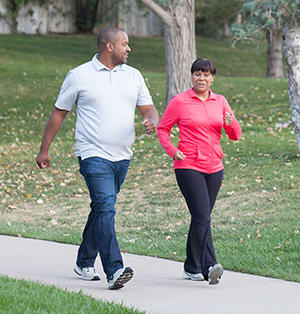
Brisk activity gets your heart beating faster. This can help make you more fit, lose extra weight, and manage your blood sugar level. Try brisk walking. Or try swimming or bike riding if you have foot or leg problems. You can break up your exercise into chunks throughout the day. Work up to at least 30 minutes of steady, brisk exercise on most days.
Warm up and cool down
Warming up and cooling down reduce your risk for injury. This also helps limit muscle soreness. Do a mild version of your activity for 5 minutes before and after your routine. You can also learn stretches that will help keep your muscles loose. Ask your doctor to show you good ways to warm up and stretch.
Do the talk-sing test
The talk-sing test is a simple way to tell how hard you're exercising. If you can talk while exercising, you're in a safe range. If you're out of breath, slow down. If you can sing a tune, it's time to pick up the pace. Try walking up a hill, adding more resistance on your stationary bike, or swimming faster.
What about eating?
You may be told to plan your exercise for 1 to 2 hours after a meal. In most cases, you don't need to eat while being active. Test your blood sugar before exercising if you take insulin or medicine that can cause low blood sugar. And carry a fast-acting sugar that will raise your blood sugar level quickly. This includes glucose tablets or glucose gel in a tube. Use it if you feel low blood sugar symptoms.
Safety tips
These tips can help you stay safe as you exercise:
- Exercise with a friend or carry a cell phone if you have one. Or join an exercise class that lets you exercise at your own pace.
- Carry or wear an ID, such as a necklace or bracelet, that says you have diabetes.
- Use the correct footwear and safety equipment for your activity. After activities, check your feet for blisters, sores, or any injury. Contact your doctor if the injury does not start to heal within 2 days.
- Drink water before, during, and after exercise.
- Dress for the weather.
- Don't exercise in very hot or very cold weather.
- Don't exercise if you're sick.
- Test your blood sugar before and after you exercise if you are told to do so. Have a small carbohydrate snack if your blood sugar is low before you start exercising.
- If your blood sugar level is 240 mg/dL or higher, it may be too high for you to be active safely. Test your urine for ketones. The presence of ketones may increase your risk for ketoacidosis. This is a serious diabetes complication.
- After your activity, check to see how it has affected your blood sugar levels.
When to contact your doctor
Stop exercising if you have any of these symptoms.
Contact your doctor now or seek immediate medical care if:
- You have pain, pressure, tightness, or heaviness in the chest.
- You have pain or heaviness in the neck, shoulders, back, arms, legs, or feet.
- You have abnormal shortness of breath.
- You have dizziness or lightheadedness.
- You have an abnormally fast or slow pulse.
- You have increased joint or muscle pain.
- You have an upset stomach (nausea) or vomiting.