Diabetes can lead to a number of foot problems. People with diabetes have a 12% to 25% chance of getting a foot sore during their lifetime. But you can prevent these with a little extra foot care. If your diabetes isn't well controlled, it can harm blood vessels. This results in poor blood flow to your feet. When your skin doesn't get enough blood flow, you are more likely to get pressure injuries. These heal slowly.
Diabetes can also damage nerves. This interferes with your ability to feel pain and pressure. When you can’t feel your foot normally, it is easy to injure your skin, bones, and joints without knowing it. For these reasons, diabetes increases the risk for fungal infections, bunions, and pressure injuries. A pressure injury is a sore or break in the skin. With these injuries, the skin seems to have worn away. Deep injuries can lead to bone infection.
Gangrene is the most serious foot problem of diabetes. It usually occurs on the tips of the toes as blackened areas of skin. The black area is dead tissue. In severe cases, gangrene spreads to the entire toe, other toes, and the whole foot. You may need to have your toe, foot, or even leg amputated. Good foot care and blood sugar control can prevent this.
Home care
-
Wear comfortable, well-fitting shoes.
-
Wash your feet daily with warm water and mild soap.
-
After drying, put a moisturizing cream or lotion on the top and bottom of your feet. Don't put lotion between toes.
-
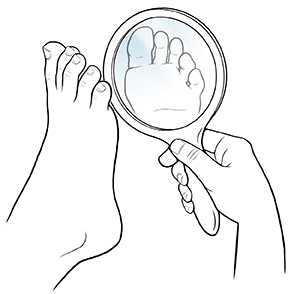
Check your feet daily for skin breaks, blisters, swelling, or redness. Look between your toes as well. If you can't see the bottoms of your feet, ask someone to look or use a mirror.
-
Wear cotton socks and change them every day.
-
Trim toenails carefully, and don't cut your cuticles. Ask your doctor to trim any corns or calluses.
-
Keep your blood sugar under control with medicines, diet, and activity.
-
If you smoke and have diabetes, it's very important that you stop. Smoking reduces blood flow to your foot.
-
Schedule foot exams at least every year, or more often if you have foot problems.
-
Put your feet up when sitting, wiggle toes, and move ankles to help improve blood flow.
-
Don't do activities that increase your risk of foot injury:
-
Don't walk barefoot.
-
Don't use heating pads or hot water bottles on your feet.
-
Don't put your foot in a hot tub without first checking the temperature with your hand.
-
Follow-up care
Follow up with your doctor as advised. Take off your shoes and socks before your appointment starts. This will remind your doctor to check your feet. Report any cut, puncture, scrape, blister, or other injury to your foot. Also report if you have a bunion, hammertoes, ingrown toenail, or pressure injury on your foot.
When to contact your doctor
Contact your doctor right away if:
-
You see black skin color anywhere on the foot.
-
You have an open sore with pus draining from the wound.
-
You have increasing foot or leg pain.
-
You have new areas of redness or swelling or tender areas of the foot.
-
You have a fever of 100.4°F (38°C) or higher, or as advised by your doctor.