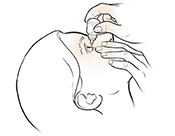
You have an infection in the membrane covering the white part of the eye. This part of the eye is called the conjunctiva. The infection is called conjunctivitis. The most common symptoms of conjunctivitis are a thick, puslike discharge from the eye, swollen eyelids, redness, eyelids sticking together upon awakening, and a gritty or scratchy feeling in the eye. Your infection was caused by bacteria. It may be treated with medicine. With treatment, the infection takes about 7 to 10 days to resolve.
Home care
-
Use prescribed antibiotic eye drops or ointment as directed to treat the infection.
-
Apply a warm compress (towel soaked in warm water) to the affected eye 3 to 4 times a day. Do this just before applying medicine to the eye.
-
Use a warm, wet cloth to wipe away crusting of the eyelids in the morning. You can also use an over-the-counter eyelid-specific wipe. This crusting is caused by mucus drainage during the night. You may also use saline irrigating solution or artificial tears to rinse away mucus in the eye. Don't put a patch over the eye.
-
Wash your hands before and after touching the infected eye. This is to prevent spreading the infection to the other eye and to other people. Don't share your towels or washcloths with others.
-
You may use acetaminophen or ibuprofen to control pain, unless another medicine was prescribed. Talk with your healthcare provider before using these medicines if you have chronic liver or kidney disease. Also talk with your provider if you have ever had a stomach ulcer or digestive bleeding.
-
Don't wear contact lenses until your eyes have healed and all symptoms are gone.
Follow-up care
Follow up with your healthcare provider, or as advised.
When to seek medical advice
Call your healthcare provider right away if any of these occur:
-
Worsening vision
-
Increasing pain in the eye
-
Increasing swelling or redness of the eyelid
-
Redness spreading around the eye