Digoxin is a heart medicine that helps slow your heartbeat. And it helps your heart beat stronger. Health care providers sometimes use this treatment for heart failure. Or they may use it for a problem with the heart rhythm (atrial fibrillation). Your provider may have other reasons to prescribe this medicine. Take your medicine as your health care provider directs. Use the tips below.
How to take digoxin
-
Take digoxin once a day, or as directed. Try to take it at the same time each day.
-
Check your pulse before you take your digoxin. If your pulse is under 60 beats per minute (or the rate that your health care provider advises for you), wait
5 minutes. Then check your pulse again. If it’s still under 60, call your provider to ask if you should take the medicine. If your pulse is normal, take your digoxin. -
Don't stop taking digoxin unless your provider tells you to. This could cause serious problems.
-
Review all your medicines with your provider and pharmacist. These include over-the-counter medicines, vitamins, and dietary or herbal supplements. Ask if any will affect the digoxin.
-
If you have a history of kidney problems, you may not be able to take digoxin. Talk about this with your provider.
If you miss a dose
-
Take it as soon as you remember if no more than 12 hours have passed from the time you usually take it. On the next day, take it at the usual time.
-
Don't take the dose if more than 12 hours have passed from the time you usually take it. On the next day, take it at the usual time.
-
Never take more than 1 dose of digoxin at a time.
How to take your pulse
-
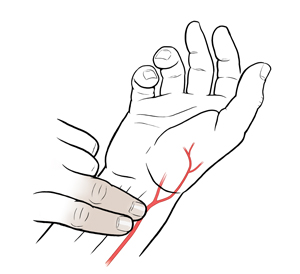
Place your first two fingers on the inside of your wrist below the base of the thumb. Press lightly.
-
Count the number of beats for 1 full minute. A normal resting pulse is between 60 and 100 beats per minute.
When to call your health care provider
You may need to have your digoxin levels checked on a regular basis.
This depends on how well your kidneys are working. It also depends on whether you take medicines that may make the levels of digoxin increase or decrease.
You may need the levels checked if you are having side effects from the medicine. Some side effects can be dangerous if the digoxin levels become higher than normal in your body. Call your health care provider before you take your next dose of digoxin if you have any symptoms. These include:
-
Nausea, vomiting, diarrhea, or loss of appetite.
-
Rash.
-
Extreme tiredness.
-
A pulse that is fast, irregular, or below 60 beats per minute, along with unusual chest pain, feeling lightheaded, or trouble breathing.
-
Feeling drowsy or confused.
-
Mild trouble breathing.
-
Blurred or double vision. Or you see green or yellow halos around lights.
-
Swelling in your feet or ankles.
-
Sudden weight gain.
When to call 911
Call 911 if:
-
You faint or feel lightheaded.
-
You have chest pain, or pain that goes to the shoulder, neck, or jaw.
-
You have severe trouble breathing.
-
You have a pulse that is unusually fast, irregular, or below 60 beats per minute, along with unusual chest pain, feeling lightheaded, or trouble breathing.