Types

Heart Valve Problems: Aortic Insufficiency

Choose a preferred language

Aortic insufficiency is also known as aortic valve regurgitation. It means your aortic valve has problems closing. Blood leaks back through the valve. Extra blood may cause the ventricle to stretch. A stretched ventricle doesn’t squeeze as well. In time, the heart won’t move blood the way it should.
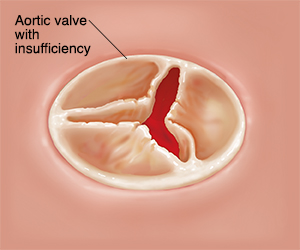
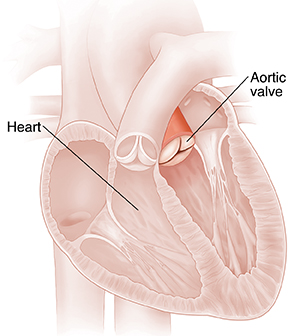
Top view of closed aortic valve with insufficiency.Cross section of heart showing aortic valve with insufficiency.


Possible causes

Most common causes include:

  • Older age

  • Heart valve infection

  • Valve problem at birth (congenital)

  • Genetic syndromes such as Marfan syndrome

  • Inflammatory diseases

  • Injury

  • Diseases that affect the aorta itself

  • High blood pressure

There may be other causes of aortic valve insufficiency.


Treating aortic insufficiency

Your healthcare provider may prescribe medicines. These can make it easier for the heart to move your blood. To treat severe aortic insufficiency, heart valve surgery may be needed, especially if you develop symptoms.


© 2000-2026 The StayWell Company, LLC. All rights reserved. This information is not intended as a substitute for professional medical care. Always follow your healthcare professional's instructions.

Start your journey toward better health

Select a primary care physician who will deliver personal care, close to home.

Find a Doctor

We have more than 4,500 specialty care physicians in our network

We have you covered from head (neurosurgery) to toe (podiatry.) And everything in-between!

Find a Doctor

Need Help?

Get the right care at the right time.

Learn More
Related Articles
Read article
Heart Health
Emotional and Family Issues in Children With Heart Disease

A detailed look at the way children may feel about having congenital heart disease, plus some tips for helping them cope.

Read article
Heart Health
Wolff-Parkinson-White Syndrome

Wolff-Parkinson-White syndrome (WPW) is a type of abnormal heartbeat. If you have WPW, you may have episodes of tachycardia, when your heart beats very rapidly

Read article
Heart Health
Right-Sided Heart Failure

Swelling in the feet and ankles is one of the first signs of right-sided heart failure. Learn how this condition is treated.

Read article
Heart Health
Rheumatic Heart Disease

Rheumatic heart disease is a condition where the heart valves have been permanently damaged by rheumatic fever.
