Increasing your flexibility helps prevent joint stiffness, improves balance and posture, and makes moving easier. The benefit of stretching is that it helps you to relax as you work to improve your flexibility. When doing these stretches, move slowly and smoothly, holding a stretch for 10 to 30 seconds. Breathe out (exhale) gently through pursed lips during the effort phase of each stretch. Talk to your healthcare provider before you start an exercise program.
Head tilt
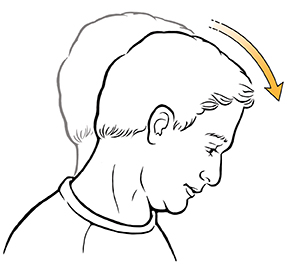
Here are suggestions:
-
Sit or stand with your shoulders relaxed. Breathe in.
-
Slowly lower your chin as you blow out. You’ll feel a stretch in the back of your neck. Keep your body posture straight when you are tilting your head.
-
While breathing in (inhaling), return to starting position. Then exhale, slowly moving your head right and left as if you are saying no.
Special instructions: ____________________________________________________
Shoulder rolls
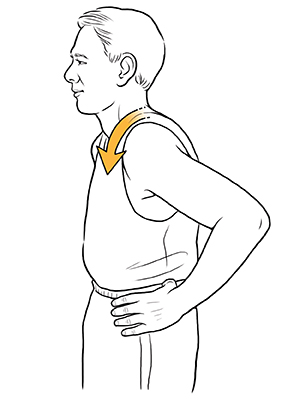
Here are suggestions:
-
Stand with your shoulders relaxed. Put your hands on your hips or keep your arms at your sides (whichever is more comfortable). Keep your head position straight.
-
Breathe in. Slowly breathe out while rolling your shoulders forward. Continue until you’re done exhaling. Then relax your shoulders.
-
Repeat step 2 while rolling your shoulders backward.
Special instructions:
Calf stretch
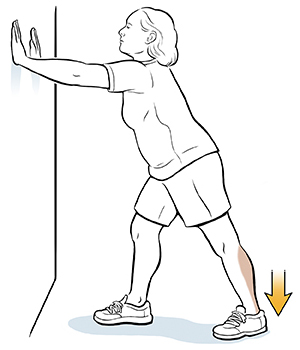
Here are suggestions:
-
Stand facing a wall with your feet side by side. Put your arms out at shoulder level. Rest your hands against the wall with your elbows slightly bent. (Don’t push against the wall.) Do pursed-lip breathing throughout this stretch.
-
Step back with your left foot. Gently lower your heel to the floor. Keep your toes pointing forward and your right knee slightly bent. You’ll feel the stretch in the back of your left lower leg (left calf).
-
Hold the stretch for 15 to 30 seconds while doing pursed-lip breathing.
-
Return to starting position. Repeat the stretch using your right leg.
Note: This stretch can also be done while holding on to the back of a sturdy chair.
Special instructions: _____________________________________________________
Quadriceps stretch
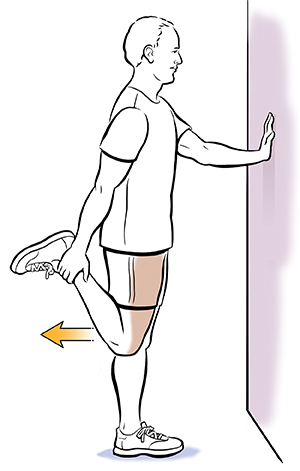
Here are suggestions:
-
Stand, holding on to a sturdy table, wall, or countertop for balance. Inhale.
-
While exhaling, reach back and grasp the ankle (or pant leg) that’s farthest from the chair. Pull your leg back until your knees line up. Keep your hips facing forward and your bent knee pointed toward the floor. You’ll feel the stretch in your thigh.
-
Hold until you finish exhaling. Then inhale while slowly lowering your leg.
-
Repeat the stretch as many times as instructed. Then turn and grasp the chair with your other hand. Repeat the stretch with your other leg.
Special instructions: _____________________________________________________
Pursed-lip breathing
Inhaling through the nose and exhaling through pursed lips makes breathing easier during exercise. To do pursed-lip breathing:
-
Relax your neck and shoulder muscles. Inhale slowly through your nose for at least 2 counts.
-
Pucker your lips as if to blow out a candle. Exhale slowly and gently through your pursed lips for at least twice as long as you inhaled.


