Soon after surgery, you’ll be taught how to take care of your residual limb. This is the part of your limb that remains after amputation.
Follow all directions from your care team closely.
Before the sutures or staples come out
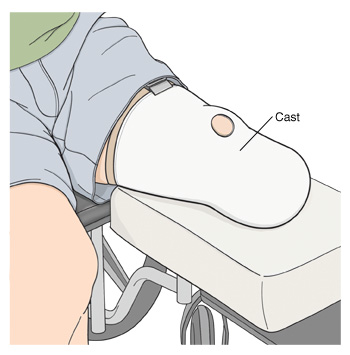
During surgery, the wound will have been closed with stitches (sutures) or staples. Your residual limb may be covered by a cast or splint. Or, another type of pressure dressing may be used, such as soft gauze covered by a tight bandage. This dressing is used to absorb moisture, protect your healing wound, and control swelling. No matter which type of dressing is used, it will likely need to be changed often. This lets your care team check how your wound is healing. You or a family member may also be taught how to change the dressing. It will need to be kept dry while you are in the shower or bath. Tell your health care provider if the cast, splint, or dressing feels too tight or too loose.
Working with a physical therapist
While in the hospital, you’ll work with a physical therapist. This is an expert in exercise and rehabilitation. They will teach you how to move your limb safely. You’ll learn how to move between two surfaces, such as a bed and a chair. You’ll also learn how to support your residual limb when you sit and lie down. This helps prevent shortening of muscles and tightening of joints. You will be given an exercise program to continue at home.
After the stitches or staples come out
Your stitches or staples will be removed about
This involves gently massaging, tapping, and rubbing your residual limb. Do this a few times each day.
Desensitization helps prepare your limb for a prosthesis. It can also help relieve phantom pain and decrease phantom sensation.
Wash your residual limb with plain soap and water, and gently pat dry. Do this at least once a day.
And don’t pick at scabs that form over your scar. While in the hospital, you’ll learn about scar massage. Scar massage can begin when the sutures or staples are out and the wound has completely healed.
Using a shrinker sock
After your wound has healed, you’ll begin wearing a shrinker sock every day. This is a tapered sock that applies pressure to the bottom of your residual limb. The shrinker sock controls swelling. It also helps shape your limb to prepare for a prosthesis. You’ll be taught how to use and clean your shrinker sock at home.
Notes for family and friends
Your family member or friend will have a lot to think about. You may be called on to serve as a helper, caregiver, or source of support. Here are some ways you can help:
-
Learn about wound care, residual limb care, and shrinker sock care.
-
Offer to help with desensitization. Your family member may have trouble reaching the back of their residual limb.
-
Be patient and supportive. Remember that your family member or friend needs to be fully involved in self-care.
When to get medical help
While the wound is healing, watch closely for signs of infection or other problems. Contact your surgeon right away if:
-
Your wound or residual limb has a bad smell.
-
Your cast, splint, or dressing loosens or falls off.
-
The area around the wound is warm or hot, or becomes red or swollen.
-
You see pus or yellow drainage near the wound, or thick discharge that is brownish gray.
-
Your wound reopens for any reason.
-
Sudden increase in pain or severe tenderness, or the extremity feels cool or cold.
-
Shaking chills.
-
You have a fever of
100.4 °F (38.0 °C) or higher, or as directed by your health care provider


