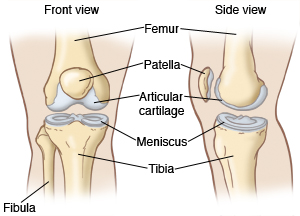
Knee pain has several common causes. These can include:
-
A sprain of the ligaments that support the joint
-
An injury to the cartilage lining of the joint
-
Arthritis from wear-and-tear or inflammation
There are other causes as well. You may have swelling, reduced movement of the knee joint, and pain with walking. A definite diagnosis will still need to be made. If your symptoms don't get better, you may need further follow-up and testing.
Home care
-
Stay off the injured leg as much as possible until pain improves.
-
Apply an ice pack over the injured area for 15 to 20 minutes every 3 to 6 hours. Do this for the first 24 to 48 hours. You can make an ice pack by filling a plastic bag that seals at the top with ice cubes and then wrapping it with a thin towel. Continue to use ice packs for relief of pain and swelling as needed. After 48 hours, apply heat (warm shower or warm bath) for 15 to 20 minutes several times a day, or alternate ice and heat. If you have to wear a hook-and-loop knee brace, you can open it to apply the ice pack, or heat, directly to the knee. Never put ice directly on the skin. Always wrap the ice in a towel or other type of cloth.
-
You may use over-the-counter pain medicine to control pain, unless another pain medicine was prescribed. Talk with your healthcare provider before using these medicines if you have chronic liver or kidney disease. Also talk with your provider if you have had a stomach ulcer or digestive bleeding or take a blood thinner..
-
If crutches or a walker have been recommended, don't put weight on the injured leg until you can do so without pain. Check with your healthcare provider before returning to sports or full work duties.
-
If you have a hook-and-loop knee brace, you can remove it to bathe and sleep, unless told otherwise.
Follow-up care
Follow up with your healthcare provider as advised. This is usually within 1 to 2 weeks.
If X-rays were taken, you will be told of any new findings that may affect your care.
Call 911
Call
-
Shortness of breath
-
Chest pain
When to seek medical advice
Call your healthcare provider right away if any of these occur:
-
Toes or foot becomes swollen, cold, blue, numb, or tingly
-
Pain or swelling spreads over the knee or calf
-
Warmth or redness appears over the knee or calf
-
Other joints become painful
-
Rash appears
-
Fever of 100.4°F (38°C) or higher, or as directed by your healthcare provider
-
Chills