A muscle spasm (also called a cramp) is an involuntary muscle contraction. The muscle or muscle group tightens quickly and strongly. A hard lump may form in the muscle. Muscle spasms can be very painful. Here's how to treat and prevent muscle spasms.
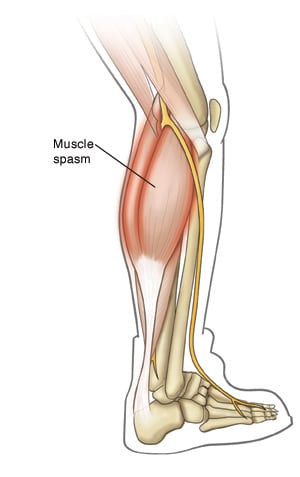
What causes muscles to spasm?
Often, the cause of a muscle spasm is not known. Muscle spasm is caused by irritation of muscle fibers. Some things can make a muscle spasm more likely. These include:
- Injury.
- Heavy exercise.
- Overtired muscles.
- A muscle held in one position for a long time.
- Dehydration.
- Low levels of certain minerals in the body.
- Certain medicines, such as water pills (diuretics).
- Certain health conditions, such as kidney failure or diabetes.
- Pregnancy.
Stopping a muscle spasm
Muscle spasms often come and go quickly. When a muscle goes into spasm, very gently stretch and massage the muscle. This may help calm the muscle fibers. Then rest the muscle.
Preventing muscle spasms
There is little or no evidence that staying hydrated, taking certain vitamins or minerals, or stretching works to prevent cramps. But these measures may still help and have other benefits. Talk to your doctor about steps to take to prevent muscle spasms. Try to:
- Drink enough fluids to prevent dehydration, especially when you exercise.
- Take vitamin or mineral supplements.
- Get regular exercise.
- Stretch regularly, especially before exercise.
- Limit caffeine.
- Limit smoking, vaping, and using other nicotine or tobacco products.
- Take a prescription muscle relaxant if prescribed by your doctor.
When to contact your doctor
Contact your doctor if you have:
- Severe cramping.
- Cramping that lasts a long time, does not go away with stretching, or keeps coming back.
- Pain, tingling, or weakness in the arms or legs.
- Pain that wakes you up at night.