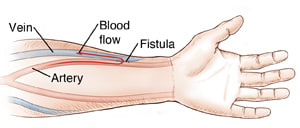
An AV fistula is a connection between an artery and a vein. For this procedure, an AV fistula is surgically made using an artery and a vein in your arm. (Your doctor will let you know if another site is to be used.) When the artery and vein are joined, blood flow increases from the artery into the vein. As a result, the vein gets bigger over time. The enlarged vein provides easier access to the blood for a treatment for kidney failure (dialysis). This sheet explains the procedure and what to expect.
Getting ready for the procedure
Prepare as you have been told. Also:
- Tell your doctor about all the medicines you take. This includes all over-the-counter and prescription medicines. It also includes herbs, vitamins, and other supplements, as well as illegal drugs. You may need to stop taking some or all of them before the procedure.
- Follow any directions you're given for not eating or drinking before the procedure.
- Do not let anyone draw blood from or take blood pressure on the arm that will have the fistula before the procedure.
The day of the procedure
The procedure takes about
Before the procedure starts:
- An I.V. (intravenous) line is put into a vein in the arm or hand not being used for the procedure. This line gives fluids and medicines.
- To keep you free of pain during the procedure, you may be given general anesthesia. This medicine lets you sleep comfortably during the procedure. Another option would be a nerve block that numbs the arm. With it, you may also be given medicine that makes you relaxed and drowsy through the procedure.
During the procedure:
- The skin over your arm may be injected with numbing medicine.
- One or more small cuts (incisions) are then made through the numbed skin. This depends on the size of your arm and the depth of the vein in your arm.
- The vein is attached to the selected artery.
- Any cuts made are then closed with stitches (sutures), staples, surgical glue, or strips of surgical tape.
After the procedure:
- You'll be asked to keep your arm raised (elevated) as often as possible for at least 1 week after the procedure.
- You'll be given medicines for pain as needed.
- Your arm and hand will be checked to make sure blood is flowing through the fistula properly. The feeling of blood rushing through the fistula is called a thrill. It is somewhat like the purring of a cat. You'll be taught how to check for this feeling each day to make sure there are no problems with your fistula. You'll also be taught how to care for your fistula at home.
- When it's time for you to leave the hospital, have an adult family member or friend ready to drive you home.
Recovering at home
Once at home, follow all the instructions you've been given. Be sure you:
- Take all medicines as directed.
- Care for your incision as instructed.
- Check for signs of infection at the incision site (see below).
- Don't do any heavy lifting and strenuous activities as directed.
- Monitor and care for your fistula as instructed.
When to contact your doctor
Contact your doctor right away if any of these occur:
- Fever of
100.4 °F (38 °C) or higher, or as advised by your doctor - Signs of infection at the incision site, such as more redness or swelling, warmth, worsening pain, bleeding, or bad-smelling drainage
- You can't feel a thrill (the vibration of blood going through your arm)
- Pain or numbness in your fingers, hand, or arm
- Bleeding, redness, or warmth around your fistula
- Sudden bulging of the fistula that is more than normal (a slight bulge is normal)
Follow-up
Your doctor will check your fistula within 1 to 2 weeks after the procedure. It will likely take about 6 to 8 weeks for the fistula to get big enough to start dialysis. After that, make sure the fistula is checked each time you have dialysis. Your doctor may also suggest checkups every 6 months.
Risks and possible complications
- The fistula doesn't work right
- Long wait before the fistula is ready (up to 6 months)
- Coldness or numbness in the hand (due to blood flowing away from the hand and into the fistula)
- An unsightly bump under the skin (due to enlargement of the fistula)
- Prolonged bleeding from the fistula after dialysis
- Narrowing or weakening of the blood vessels used for the fistula
- Forming of blood clots in the blood vessels used for the fistula
- Risks of anesthesia or any other medicines used during the procedure
Living with an AV fistula
A problem, such as a narrowing (stricture) of the vein or an infection, can make the fistula unusable. If this happens, you may need other treatments to fix or make a new fistula. To protect your fistula, follow these and any other guidelines you're given:
- Check your fistula as often as your doctor says. If you can't feel your thrill, let your doctor know right away.
- Make sure your fistula is checked before each dialysis treatment.
- Don't let anyone draw blood from or take blood pressure on the arm that has the fistula.
- Wash your hands often and keep the area around your fistula clean.
- Don't sleep on the arm that has the fistula.
- Don't wear tight clothing, tight jewelry, or a watch on the arm with your fistula.
- Protect your fistula from cuts, scrapes, or blows.


