Types

Kidney Problems

Choose a preferred language

The kidneys may fail from reduced blood supply, damaged blood vessels or filtering units (nephrons), or a blocked urinary tract. Illnesses that affect the entire body, such as diabetes or high blood pressure, are the most common cause of kidney damage. Illnesses that harm the kidneys directly (such as glomerulonephritis and polycystic disease) may also cause filtering problems. Kidney damage can be short-term (temporary) or lifelong (permanent), depending on what caused it.
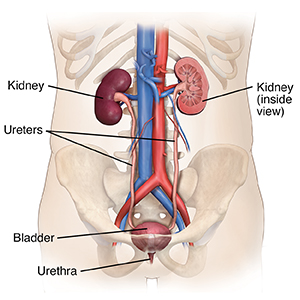
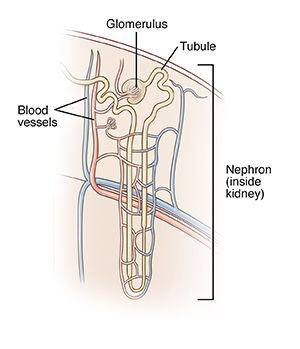
Outline of human torso showing front view of urinary tract.Closeup view of nephron in kidney.


Problems with blood vessels

An illness can damage blood vessels inside the kidneys. As a result, the nephrons get less blood, and pressure inside the kidneys can't be controlled.


Problems with nephrons

Reduced blood supply or the wrong pressure can harm the nephrons. This makes them less able to remove wastes from the blood. As a result, the kidneys can’t maintain the correct balance of fluid and chemicals in the body. Waste products may be returned to the blood. Or vital chemicals and proteins may be lost in the urine.


Problems in the urinary tract

A problem with the structure of the urinary tract may be present from birth or it may develop over time. The urinary tract can become blocked any place between the kidney and the tube that lets urine pass out of the body (the urethra). There are many reasons for such a blockage. These include kidney stones, scar tissue from past infections, or an enlarged prostate gland. Abnormal function of the urinary tract can also lead to damage to the kidney. For instance, there may be urine backflow from the ureter to the kidney. Or a damaged bladder muscle may lead to holding urine. If waste can’t leave the body, your health is at risk.


© 2000-2026 The StayWell Company, LLC. All rights reserved. This information is not intended as a substitute for professional medical care. Always follow your healthcare professional's instructions.

Start your journey toward better health

Select a primary care physician who will deliver personal care, close to home.

Find a Doctor

We have more than 4,500 specialty care physicians in our network

We have you covered from head (neurosurgery) to toe (podiatry.) And everything in-between!

Find a Doctor

Need Help?

Get the right care at the right time.

Learn More
Related Articles
Read article
Urology
Understanding Bladder Stones

Bladder stones are small deposits of crystals made from minerals and proteins that form in the urine. They may form when a small amount of urine stays in your bladder after urinating.

Read article
Digestive Health
Abdominal X-ray

An abdominal X-ray may be done to check the area for causes of belly pain. It can also be done to find an object that has been swallowed or to look for a blockage or a hole in the intestine. Read on to learn what to expect before, during, and after this imaging test.

Read article
Urology
What Is Interstitial Cystitis?

Interstitial cystitis (IC) is a chronic and painful condition of the bladder. People with IC have a bladder wall that is tender and easily irritated, leading to uncomfortable symptoms. Although IC currently has no cure, the symptoms can be managed to help you feel better and live more comfortably.

Read article
Urology
Monitoring Kidney Health

Your healthcare provider will check the health of your kidneys. That way, treatment can be adjusted if your condition changes. If you have other health problems that affect your kidneys, such as diabetes or high blood pressure, they will be checked also.