Nutrition

More Tips for Healthy Eating Out

Choose a preferred language

Be creative when eating out. Look up the menu ahead of time to see what is offered. Many places don’t make you stick exactly to the menu. Instead of ordering a large entree, choose an appetizer or two and a bowl of soup. A mix of side orders can also make a good meal. Read the descriptions of other entrees and specials. If another entree comes with baby carrots, ask for a side order of them even if they don’t come with your entree. Ask how food is prepared or if it can be made differently.
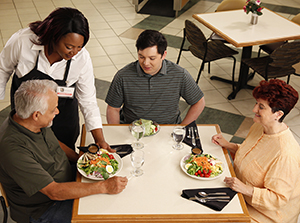
Waitress serving healthy food to two men and a woman in restaurant.


Tips for making the most of your meal out

  • Ask to have high-fat, high-calorie extras, such as french fries and potato chips, left off your plate. This way you won’t be tempted. 

  • Ask what substitutions are available. Instead of french fries, you may be able to have a side of salad with low-calorie dressing or steamed vegetables.

  • Order low-fat milk instead of cream for your coffee.

  • Ask for vegetables and main courses to be served without sauces, butter, margarine, or oil.

  • Be aware of portion size. You don’t have to clean your plate. Take half your meal home in a to-go box to eat the next day.

  • Look for heart-healthy or low-fat entrees that include whole grains, vegetables, or fruits.

  • Choose foods that are grilled, broiled, baked, poached, boiled, roasted, or steamed.

  • Don't order dishes that are described on the menu as fried, breaded, smothered, rich, or creamy.

© 2000-2026 The StayWell Company, LLC. All rights reserved. This information is not intended as a substitute for professional medical care. Always follow your healthcare professional's instructions.

Start your journey toward better health

Select a primary care physician who will deliver personal care, close to home.

Find a Doctor

Need Help?

Get the right care at the right time.

Learn More
Related Articles
Read article
Wellness
Medical Nutrition Therapy for Weight Loss

Medical nutrition therapy is a type of treatment for people who are at a weight that is higher than what is healthy for them. It's also for people with certain health conditions. During treatment, you'll work with a registered dietitian to make a nutrition plan just for you.

Read article
Wellness
Ileostomy: Nutritional Management

You don't have to eat a special diet just because you've had an ileostomy. Most foods, chewed well and eaten slowly, won't give you problems, unless they did before. But you may need to be more aware of foods that make your stool more watery than normal and foods that cause gas or odor. You also need plenty of fluids and vitamins.

Read article
Wellness
Low-Salt Choices

Here are some ideas for low-salt foods you can easily prepare yourself.

Read article
Wellness
Use the New Food Pyramid

The New Food Pyramid is a symbol that shows the types of foods that are recommended by the Dietary Guidelines for Americans 2025-2030. It's designed to encourage people eat a variety of healthy foods.