Types

What Is Cardiac Asthma?
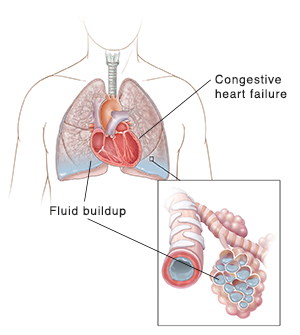
Fluid buildup in the lower part of the lungs and alveoli as a result of congestive heart failture.

Cardiac asthma is caused by the backup of fluid in the left side of the heart. This may happen if your heart pumps weakly or you have a leaky valve. Or it may happen if you were born with a heart problem. Cardiac asthma is a sign of congestive heart failure.
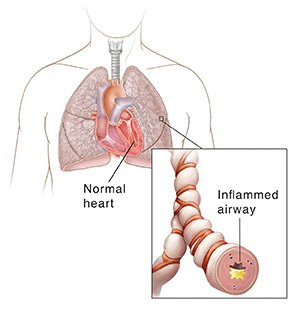
In the lungs, inflammation of the airway causes bronchiole asthma.

Cardiac asthma is not the same as bronchial asthma. But it causes similar symptoms such as wheezing, coughing, and shortness of breath. Bronchial asthma is triggered by allergies, pollutants, exercise, stress, or lung disease. The small airways in the lungs become irritated and inflamed.

Treatments for bronchial asthma and cardiac asthma are very different. Bronchial asthma is treated with oral or inhaled medicines that open the airways. Treatments for cardiac asthma depend on the cause. They may include heart medicines to control blood pressure and remove excess fluid. Treatment also may include proper diet and modified daily activities. If the cause is a leaky valve or congenital heart defect, surgery may be needed.

Author: Burgo, Kate

Online Medical Reviewer: Rita Sather RN

Online Medical Reviewer: Terri Koson DNP RN ACNP

Online Medical Reviewer: Vinita Wadhawan Researcher

Date Last Reviewed: 02/01/2025

Copyright Health Ink & Vitality Communications


Start your journey toward better health

Select a primary care physician who will deliver personal care, close to home.

Find a Doctor

We have more than 4,500 specialty care physicians in our network

We have you covered from head (neurosurgery) to toe (podiatry.) And everything in-between!

Find a Doctor

Need Help?

Get the right care at the right time.

Learn More
Related Articles
Read article
Heart Health
Understanding Orthostatic Hypotension

Orthostatic hypotension is low blood pressure when you stand up from sitting or lying down. It can cause symptoms for such as dizziness, lightheadedness, and blurry vision. It may also cause fainting and falls.

Read article
Heart Health
Mitral Valve Prolapse

Most cases of mitral valve prolapse don’t cause any harm and have no symptoms. But some people may have symptoms. Read on to learn more about this condition and what kind of care is needed.

Read article
Heart Health
Understanding Mitral Valve Regurgitation

Mitral valve regurgitation is when the mitral valve in the heart is leaky. Learn more about this condition, including causes, symptoms, and how it's diagnosed.

Read article
Heart Health
The Cardiologist

A cardiologist is a doctor who has had extra training to treat problems of the heart and blood vessels. These include heart attack and heart failure.