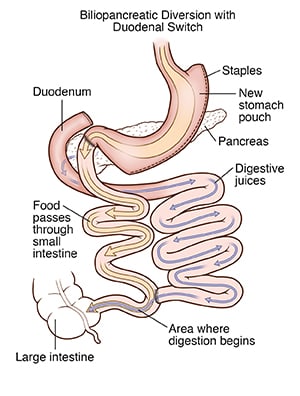
Bariatric surgery can be done in several ways. This type of bariatric surgery, called biliopancreatic diversion with duodenal switch (BPD/DS), changes the size of your stomach and the length of your small intestine. The goal is to limit how much food can be eaten and absorbed at one time. During this type of procedure, part of the stomach is closed off with staples to create a smaller pouch. The remainder of the stomach is removed. This smaller stomach restricts the amount of food you can eat at one time. The small intestine is then divided, and only a very short length of its lower portion is reattached to the stomach pouch. Because part or most of the small intestine is bypassed, less water and fewer nutrients from food are absorbed.
Vitamin supplements help with nutrient loss
Only a very short length of intestine is left that can absorb food. As a result, most of the food that is eaten is expelled as waste and not absorbed as energy. This can lead to nutritional deficiencies. Nearly all people take vitamin supplements to prevent this from happening.
Special note: The gallbladder
Bariatric surgery is designed to cause a large amount of weight loss. Weight loss can cause deposits in the gallbladder called gallstones. The gallbladder may be removed during your surgery if you already have gallstones. Or it may need to be removed at a later date if you develop gallstones.
All types of bariatric surgery have different advantages and disadvantages. Be sure to discuss the risks and complications of this surgery with your doctor.
Featured in
Online Medical Reviewer: Jonas DeMuro MD
Online Medical Reviewer: Raymond Kent Turley BSN MSN RN
Online Medical Reviewer: Rita Sather RN
Date Last Reviewed: 12/01/2022
© 2000-2026 The StayWell Company, LLC. All rights reserved. This information is not intended as a substitute for professional medical care. Always follow your healthcare professional's instructions.