The skin inside your nose is fragile and filled with blood vessels. That's why even a slight injury to your nose can sometimes cause bleeding. Hard nose blowing, dry winter air, colds, and nose-picking can also cause nosebleeds. Medicines, such as warfarin, aspirin, and other blood thinners, can make it more likely to have a nosebleed that's hard to stop. Normally, nosebleeds aren't a cause for concern. But in some cases, they can mean that you have a more serious health problem. Know when to get medical care for a nosebleed.
When to go to the emergency room (ER)
Most nosebleeds aren’t a medical emergency. In fact, you often can treat them yourself. But see your healthcare provider if you have nosebleeds often. Call 911, or get immediate medical care at the nearest emergency department if you:
-
Have a head injury
-
Have bleeding that lasts more than 15 to 30 minutes or is severe
-
Feel weak or faint
-
Have trouble breathing
What to expect in the ER
-
You'll be examined and may have blood tests.
-
You may be given medicated nose drops to stop the nosebleed.
-
The healthcare provider may pack gauze, or a small balloon, into your nose to put pressure on the vessel and help stop bleeding.
-
The bleeding vessel may be cauterized. During this procedure, the vessel is burned with an electrical device or chemical. Your nose is first numbed so you won’t feel any pain.
-
In rare cases, you may need surgery to control the bleeding.
Home care for a nosebleed
-
Don't blow your nose for 12 hours after the bleeding stops. This will let a strong blood clot form. Don't pick your nose. This may restart bleeding.
-
Don't drink alcohol or hot liquids for the next 2 days. Alcohol and hot liquids can dilate blood vessels in your nose. This can cause bleeding to start again.
-
Don't take ibuprofen, naproxen, or medicines that contain aspirin. These thin the blood and may cause your nose to bleed. You may take acetaminophen for pain, unless another pain medicine was prescribed.
-
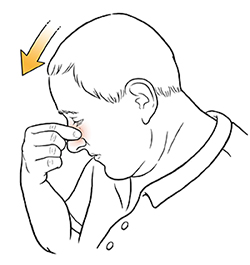
If the bleeding starts again, sit up and lean forward to prevent swallowing blood. Pinch your nose tightly on both sides for 10 to 15 minutes. Time yourself. Don’t release the pressure on your nose until 10 minutes is up. If bleeding doesn't stop, continue to pinch your nose. Call your healthcare provider.
-
If you have a cold, allergies, or dry nasal membranes, lubricate the nasal passages. Gently apply a small amount of petroleum jelly inside the nose with a cotton swab twice a day (morning and night).
-
Don't overheat your home. This can dry the air and make your condition worse.
-
Put a humidifier in the room where you sleep. This will add moisture to the air.
-
Use a saline nasal spray to keep nasal passages moist.
-
Don't pick your nose. Keep fingernails trimmed to decrease risk of bleeds.
-
Don't smoke. Stay away from secondhand smoke. Don't let people smoke in your home.
-
Follow all other home care instructions from your healthcare provider.
-
Call your healthcare provider if you have any questions or concerns.
Online Medical Reviewer: Chris Southard RN
Online Medical Reviewer: Marianne Fraser MSN RN
Online Medical Reviewer: Ronald Karlin MD
Date Last Reviewed: 03/01/2024
© 2000-2026 The StayWell Company, LLC. All rights reserved. This information is not intended as a substitute for professional medical care. Always follow your healthcare professional's instructions.