Your potassium supplement helps replace potassium your body has lost. This loss may be because of a medicine you take, such as a water pill (diuretic). Or it may be because of a health condition you have.
The reason I’m taking potassium is:
___________________________________________
Medicine tips
-
Read the fact sheet that comes with your medicine. It tells you when and how to take it. Ask for a medicine fact sheet if you don’t get one.
-
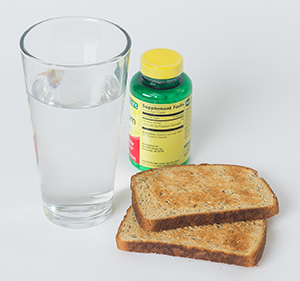
Always take your potassium with food.
-
If you take a long-acting tablet or capsule, swallow it with a full glass of water. Don't crush or chew it unless you’re told it’s OK to do so.
-
If you take potassium as granules, powder, fizzing tablets, or liquid, you must dilute it in at least 1 cup (8 oz.) of cold water or juice. Wait for fizzing to stop before drinking the liquid. Then sip slowly.
-
If you miss a dose, take it as soon as you remember. But if it's a few hours before your next dose, skip the missed dose. Don't take a double dose.
For your safety
-
Ask your healthcare provider or pharmacist for a list of foods that have potassium. Potatoes, orange juice, and bananas are high in potassium. Talk with your provider before changing the amounts of foods you eat that are high in potassium. Ask your provider if you shouldn't drink grapefruit juice.
-
Don't use salt substitutes. Don't eat foods labeled low-sodium unless your healthcare provider says it’s OK. Many have extra potassium.
-
Talk with your healthcare provider or pharmacist before taking other medicines. This includes prescription or over-the-counter medicines. It also includes vitamins, minerals, herbal remedies, and other supplements.
-
Refill your prescription before you run out.
-
Don't share your medicine with anyone.
-
Check your blood pressure regularly as directed by your healthcare provider.
-
Have blood tests as advised to watch your potassium levels.
When to call your healthcare provider
Call your healthcare provider right away if any of these occur:
-
Numbness or tingling in hands or feet
-
Pain when swallowing
-
Abnormal weakness or tiredness
-
Mild palpitations
The following side effects should go away in 2 weeks and don't need medical care. But call your healthcare provider if these don't go away:
-
Diarrhea
-
Upset stomach (nausea)
-
Stomach gas
-
Occasional vomiting
Call 911
Call 911 right away if any of these occur:
-
Confusion
-
Pale, gray skin
-
Allergic reaction, such as skin rash, itching, or swelling of the face, lips, or tongue
-
Black, tarry stools
-
A new, sudden irregular heartbeat
-
Feeling faint, lightheaded, or passing out
-
Abnormal or new chest pain
-
Severe palpitations
Online Medical Reviewer: Ronald Karlin MD
Online Medical Reviewer: Stacey Wojcik MBA BSN RN
Online Medical Reviewer: Steven Kang MD
Date Last Reviewed: 07/01/2019
© 2000-2026 The StayWell Company, LLC. All rights reserved. This information is not intended as a substitute for professional medical care. Always follow your healthcare professional's instructions.