Palpitations are the feeling that your heart is beating hard, fast, or irregular. Some describe it as "pounding," "flip-flopping in the chest," or "skipped beats." Palpitations may occur in someone with or without heart disease.
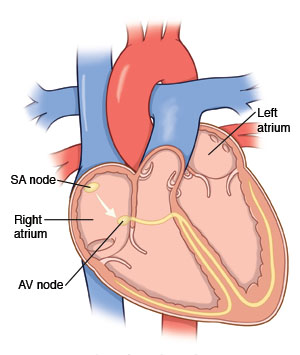
Heart-related causes:
-
Heart rhythm problem (arrhythmia).
-
Heart valve disease.
-
Disease of the heart muscle (cardiomyopathy).
-
Coronary artery disease.
-
High blood pressure.
Nonheart-related causes:
-
Certain medicines, such as asthma inhalers and decongestants.
-
Some herbal supplements, energy drinks and pills, and weight loss pills.
-
Illegal stimulant drugs, such as cocaine, crank, methamphetamine, PCP, and ecstasy.
-
Caffeine, alcohol, and tobacco.
-
Health conditions, such as thyroid disease, anemia, anxiety, and panic disorder.
Sometimes the cause can't be found.
Home care
Follow these home care tips:
-
Don't use too much caffeine, alcohol, or tobacco, or any stimulant drugs.
-
Tell your health care provider about any prescription, over-the-counter, vitamins, supplements, or herbal medicines you take.
Follow-up care
-
Follow up with your health care provider, or as advised.
Call 911
This is the fastest and safest way to get to the emergency department. The paramedics can also start treatment on the way to the hospital, if needed.
Don't wait until your symptoms are severe to call
-
Chest pain.
-
Shortness of breath.
-
Feeling lightheaded, faint, or dizzy, or losing consciousness.
-
A very irregular heartbeat.
-
A rapid heartbeat that makes you uncomfortable.
-
A slower than usual heart rate along with symptoms.
-
Chest pain with weakness, dizziness, heavy sweating, nausea, or vomiting.
-
Extreme drowsiness, confusion, or weakness.
-
Weakness of an arm or leg, or on one side of the face.
-
Trouble with speech or vision.
When to get medical advice
Contact your health care provider or get medical care right away if you have palpitations that last longer than normal, or are different from your past palpitations.
Online Medical Reviewer: Heather M Trevino BSN RNC
Online Medical Reviewer: Rajadurai Samnishanth Researcher
Online Medical Reviewer: Rita Sather RN
Date Last Reviewed: 03/01/2025
© 2000-2026 The StayWell Company, LLC. All rights reserved. This information is not intended as a substitute for professional medical care. Always follow your healthcare professional's instructions.

