Treatment

Types of IV (Intravenous) Chemotherapy

Choose a preferred language

Chemotherapy (chemo) is most often given by IV (intravenous) infusion. This is done through a soft flexible tube (catheter) placed in a vein. The most common types of IV treatment are:

  • IV push (IV bolus). This is given over a few minutes. This type of infusion is often done in an outpatient setting. This may be in a hospital, at a clinic, or at your healthcare provider’s office. Sometimes it’s done at home with the help of a visiting infusion nurse.

  • IV infusion. This is given over 15 to 30 minutes up to several hours. It is often done in an outpatient setting. But for some therapies you may need to stay overnight for 1 or more days at the hospital. In some cases, IV infusions may be given at home.

  • Continuous infusion. This type may last for days or weeks at a time. The medicines are given at a rate that is controlled by a small, portable, electronic pump. This is attached to the IV tubing. And it can be worn at home. This lets you have chemo and continue your normal activities at the same time.
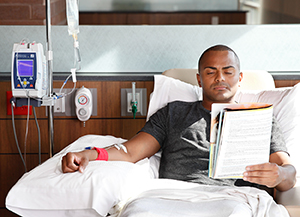
Man reading while having chemotherapy infusion.


Getting ready for your treatment

Depending on the type and number of medicines, the length of your IV infusion treatment may range from hours to days. To make this time more pleasant, wear comfortable clothes and bring a comforting blanket. You can also read, or listen to music or programs on portable devices.

Featured in

© 2000-2026 The StayWell Company, LLC. All rights reserved. This information is not intended as a substitute for professional medical care. Always follow your healthcare professional's instructions.

Start your journey toward better health

Select a primary care physician who will deliver personal care, close to home.

Find a Doctor

We have more than 4,500 specialty care physicians in our network

We have you covered from head (neurosurgery) to toe (podiatry.) And everything in-between!

Find a Doctor

Need Help?

Get the right care at the right time.

Learn More
Related Articles
Read article
Oncology
Whipple Procedure

This surgery is done to remove parts of the pancreas, parts of the small intestine, and certain other organs. Learn why it's done, what happens before and after surgery, and how to care for yourself afterwards.

Read article
Oncology
Oral Cancer: Chemotherapy

Chemotherapy uses anticancer medicines to kill cancer cells. The medicines are made to attack and kill cancer cells that grow quickly. Some normal cells also grow quickly. Because of this, chemotherapy can also harm those cells. This can cause side effects.

Read article
Oncology
Targeted Therapy for Cancer

Targeted therapy uses medicines that are aimed at the cancer cell specifically. Because of this, targeted therapy may cause fewer side effects. There are many kinds of targeted therapy medicines. They work differently on different types of cancers.

Read article
Oncology
Radiofrequency Ablation (RFA) of Lung Tumors

This procedure uses a small needle electrode to send an electrical current to heat and kill cancer cells. The heat also closes nearby blood vessels, limiting bleeding. Read on to learn more about what to expect with this procedure.