Management

Walker Boot

Choose a preferred language

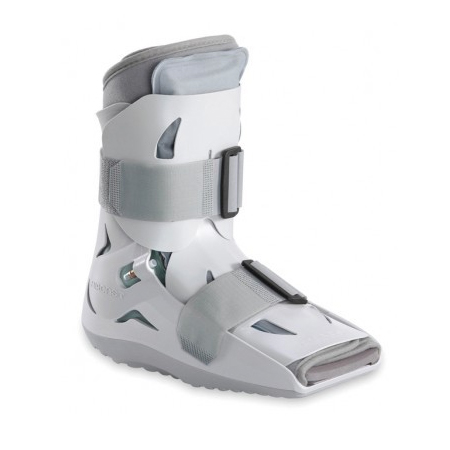
Traditional splints and casts for the foot and ankle protect the injury by preventing movement at the joints. But many injuries heal better and faster if the injured joint can be moved and also protected at the same time. This is the reason for using a walker boot.

This is a short boot. It supports and protects the foot and ankle while allowing you to walk. It has padded air cells that provide compression and help circulation. It is used for both foot and ankle injuries—both sprains and minor fractures.

Ankle and foot sprains can take 4 to 6 weeks or longer to heal. People with severe injuries or those older than age 60 may need more time to heal. During that time, you are prone to reinjury. You may suddenly twist your foot or ankle again while the ligaments are still weak.

When treating a sprain, wear the walker boot whenever walking for at least 4 weeks, or as long as you continue to have ankle pain, or as directed by your provider.

Talk with your healthcare provider for specific advice about the treatment of your condition.

© 2000-2026 The StayWell Company, LLC. All rights reserved. This information is not intended as a substitute for professional medical care. Always follow your healthcare professional's instructions.



Start your journey toward better health

Select a primary care physician who will deliver personal care, close to home.

Find a Doctor

We have more than 4,500 specialty care physicians in our network

We have you covered from head (neurosurgery) to toe (podiatry.) And everything in-between!

Find a Doctor

Need Help?

Get the right care at the right time.

Learn More
Related Articles
Read article
Orthopedics
Self-Care for Strains and Sprains

Most minor strains and sprains can be treated with self-care. But if you have torn tissue or damaged blood vessels, nerves, or bones, be sure to call your healthcare provider.

Read article
Orthopedics
Colles Wrist Fracture, No Reduction Needed

You have a break (fracture) of the forearm bone (radius) where it attaches to your wrist. It may be called a Colles fracture. The bone isn't out of place and won't need to be set (reduced). But you'll need a splint or cast.

Read article
Orthopedics
Leg Muscle Stretches: Knee Flexion

The following flexibility exercise may be suggested by your therapist. Repeat as many times as instructed. Stop the exercise if it causes pain, and discuss it with your physical therapist or healthcare provider:

Read article
Orthopedics
Exercises for Shoulder Flexibility: Wand Stretch

Improving your flexibility can reduce pain. Stretching exercises also can help increase your range of pain-free motion. Breathe normally when you exercise. Try to use smooth, fluid movements. Never force a stretch.