Recovery

After Knee Replacement: Controlling Swelling

Choose a preferred language


Swelling is common after total knee replacement. It may be worse after exercise. To help control swelling, follow the steps below.


Ice your knee

Wrap an ice pack or bag of frozen peas in a thin cloth, then place it on your knee. Don't use ice for more than 20 minutes at a time. If you have an ice machine, use it as directed.


Elevate your leg

Elevate your leg above your heart. Ask your doctor about safe positions to do this.


Do ankle pumps
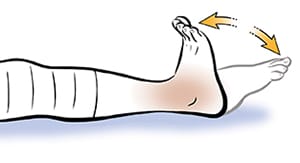
Leg from knee down with bandage on knee, showing person doing ankle pumps.

Continue doing ankle pumps. They help reduce swelling, improve circulation, and prevent blood clots. Point, then flex both feet slowly. Repeat this 10 to 30 times each hour.


Compression stocking

Your surgeon may recommend wearing a compression stocking. This will help control swelling. It may also help prevent blood clots. If it is difficult for you to put on a compression stocking, an elastic bandage like an ACE wrap bandage can be used instead. Use a wide bandage, such as one that is 6 or 8 inches wide, to make it easier to wrap your leg.

© 2000-2026 The StayWell Company, LLC. All rights reserved. This information is not intended as a substitute for professional medical care. Always follow your healthcare professional's instructions.



Start your journey toward better health

Select a primary care physician who will deliver personal care, close to home.

Find a Doctor

We have more than 4,500 specialty care physicians in our network

We have you covered from head (neurosurgery) to toe (podiatry.) And everything in-between!

Find a Doctor

Need Help?

Get the right care at the right time.

Learn More
Related Articles
Read article
Orthopedics
Discharge Instructions for Scoliosis Surgery

Instructions for care after scoliosis surgery.

Read article
Orthopedics
Using Log-Roll to Get Out of Bed (Hip Care)

Here are images showing how to safely get out of bed after a hip replacement.

Read article
Orthopedics
Discharge Instructions for Shoulder Arthroscopy

You had a shoulder arthroscopy. It is a surgical procedure that helps the health care provider diagnose and treat shoulder problems. These include instability, arthritis, and rotator cuff problems. Below are instructions to help you care for your shoulder when you are at home.

Read article
Orthopedics
Discharge Instructions: Using Crutches (Non-Weight-Bearing)

Your healthcare provider has prescribed crutches for you. Follow our step-by-step guide to using crutches.