Recovery

After Shoulder Replacement Surgery: Your Home Recovery

Choose a preferred language

At home, your goal is to return safely and comfortably to your normal activities. To get the most from your new shoulder, you need to take an active role in your recovery. Be sure to follow your exercise program and see your surgeon for checkups.


The first months

Remember that it takes 3 to 6 months, or possibly more, for your shoulder to heal. Recovery from a broken bone may take longer. You will have some pain and swelling at first. Your healthcare provider may give you medicine. They may suggest you use an ice pack. You may also keep using your sling. Your exercise program will involve more active use of your arm and shoulder. It’s vital to do your exercises as advised to get back the greatest strength, flexibility, and movement.
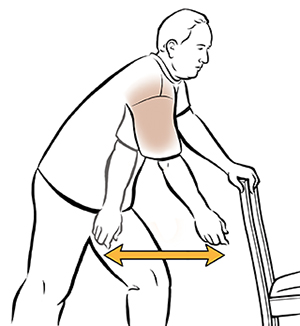
Man leaning over swinging arm front to back doing shoulder exercise.


Checking your progress

Your sutures (stitches) or staples will most likely be removed 10 to 14 days after surgery. Your surgeon will check the range of motion and strength in your shoulder for the first year after surgery. They may see you once a year after that. Be sure to keep all your appointments and ask any questions you have. Your healthcare provider may also recommend that you take antibiotics before you have dental work or surgery. You may be given a card that says you have a prosthesis. Use this card at security gates with metal detectors.


Call your healthcare provider if you have

  • Increased pain, numbness, or tingling

  • Drainage, redness, or swelling around the incision

  • A fever of 100.4°F (38°C) or higher, or as directed by your healthcare provider

  • Chills

  • Redness, pain or swelling in the arm

  • Shortness of breath, chest pain or racing heart that does not slow down with rest

Featured in

© 2000-2026 The StayWell Company, LLC. All rights reserved. This information is not intended as a substitute for professional medical care. Always follow your healthcare professional's instructions.

Start your journey toward better health

Select a primary care physician who will deliver personal care, close to home.

Find a Doctor

We have more than 4,500 specialty care physicians in our network

We have you covered from head (neurosurgery) to toe (podiatry.) And everything in-between!

Find a Doctor

Need Help?

Get the right care at the right time.

Learn More
Related Articles
Read article
Orthopedics
Discharge Instructions for Scoliosis Surgery

Instructions for care after scoliosis surgery.

Read article
Orthopedics
After Hip Surgery: Mastering Daily Tasks

Read this for some tips about how to safely do your daily tasks after hip replacement surgery.

Read article
Orthopedics
Back health after surgery

Taking care of your health can help you recover faster, feel better, and reduce the risk of reinjury.

Read article
Orthopedics
Discharge Instructions for Foot Surgery

Arrange to have an adult drive you home after surgery. If you had general anesthesia, it may take a day or more to fully recover. So, for at least the next 24 hours: Do not drive or use machinery or power tools; do not drink alcohol; and do not make any major decisions.