Treatment

Electrothermal Catheter Therapy: After the Procedure

Choose a preferred language

The procedure is over soon, but you won’t recover overnight. For the first week, you may feel more back pain than usual. This is normal. It may take 6 months or more to reach full improvement of your back pain. Be patient and stick to your treatment plan to make sure you get better.


In the hospital

After your procedure, you’ll be moved to the recovery room. You may stay there for 1 to 2 hours. You’ll be given pain medicine if you need it. You will also be checked to make sure that your legs are not numb or weak. When it’s time for you to leave, you’ll be given:

  • A prescription for pain medicine to take at home

  • Instructions on how to take care of yourself during your recovery

  • A back brace, if needed

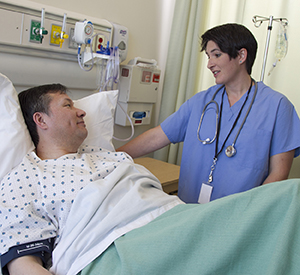
    Healthcare provider talking to man in hospital bed.


At home

For the first 4 weeks:

  • Rest and heal at home.

  • Be careful not to bend or twist.

  • Limit your sitting time as advised by your healthcare provider.

During this time, you will have a follow-up appointment with your healthcare provider. Depending on how your recovery goes:

  • You may start to exercise as directed by your healthcare provider or physical therapist.

  • You may return to work as soon as 4 weeks after the procedure, or as directed by your healthcare provider or physical therapist.


When to call your healthcare provider

Contact your provider right away if you have:

  • Increasing redness or drainage from your needle insertion site

  • Increasing pain, weakness, or numbness in your legs

  • A fever above 100.4°F ( 38°C), or as directed by your provider

  • Loss of bowel or bladder control

  • A severe headache

Online Medical Reviewer: Jimmy Moe MD

Online Medical Reviewer: Ronald Karlin MD

Online Medical Reviewer: Tara Novick

Date Last Reviewed: 10/01/2024

© 2000-2026 The StayWell Company, LLC. All rights reserved. This information is not intended as a substitute for professional medical care. Always follow your healthcare professional's instructions.



Start your journey toward better health

Select a primary care physician who will deliver personal care, close to home.

Find a Doctor

We have more than 4,500 specialty care physicians in our network

We have you covered from head (neurosurgery) to toe (podiatry.) And everything in-between!

Find a Doctor

Need Help?

Get the right care at the right time.

Learn More
Related Articles
Read article
Orthopedics
Treating Mallet, Hammer, and Claw Toes

Learn how these common conditions affecting the toes are treated.

Read article
Orthopedics
Elbow Arthroscopy: Conditions Treated

Arthroscopy is used to find and treat elbow problems. These include loose bodies, bone spurs, osteochondritis dissecans (OCD), and synovitis.

Read article
Orthopedics
Upper Body Exercises Before Surgery or Procedure: Help with Walker or Crutch Use

Doing exercises before your knee replacement can help speed your recovery. These exercises build upper body strength. This can help you when you’re using a walker or crutches to get around after surgery. Your physical therapist or surgeon may advise you to use weights to make the exercises more effective. Follow your healthcare provider’s instructions.,

Read article
Orthopedics
The Orthopedic Treatment Team

Members of your treatment team may include an orthopedic surgeon, a rheumatologist, and a physical therapist. Read on for details.