Ticks are small arachnids that feed on the blood of rodents, rabbits, birds, deer, dogs, and people. A tick bite may cause redness, itching, and slight swelling at the site. Sometimes you may have no reaction where the tick bit you.
Ticks spread disease when microbes in their saliva get into your skin and blood. There are more than 800 species of ticks. But many aren't known to spread disease to humans. Ticks often spread a disease near the end of a meal. The hard ticks tend to attach and feed for hours or days. It may take hours before a hard tick transmits microbes. Soft ticks often feed for less than 1 hour and can spread diseases quickly. Lyme disease is the most common tick-borne disease. But there are at least 20 different infections that are transmitted by ticks in the U.S.
Symptoms of tick-related diseases vary depending on the disease. The most common symptoms are:
-
Fever
-
Chills
-
Aches and pains such as headache, extreme tiredness (fatigue), and muscle aches
-
Joint pain (with Lyme disease)
-
Rash
How to remove a tick
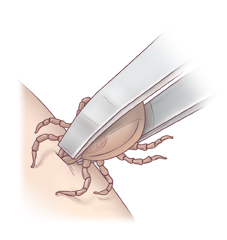
If you find a tick, don't panic. Simply remove it as soon as possible.
-
Try to carefully remove the tick with fine-tipped tweezers.
-
Grasp the tick near its head as close to the skin’s surface as possible. Pull without twisting and don't crush the body.
-
After removing the tick, thoroughly clean the bite area and your hands with rubbing alcohol or soap and water.
-
Put a live tick in alcohol, or in a sealed bag or container. Or flush it down the toilet.
You may want to know if the tick that bit you is carrying a disease such as Lyme's. In many states and counties you can send the tick to a local lab for analysis.
When to get medical care
If you can't easily remove the tick or if you leave the head in your skin, get medical care right away.
Tick paralysis is a rare disease thought to be caused by a toxin in tick saliva. The symptoms include:
-
Weakness that starts in legs and progresses rapidly
-
Paralysis
-
Breathing problems
-
Numbness
If you or someone bitten by a tick has these symptoms, get medical care right away. Removing the tick stops the symptoms in about 24 hours.
If you have a rash, aches, and pains, or fever within a few weeks of removing a tick, see your healthcare provider. Tell the provider about your recent tick bite, when the bite occurred, and where you most likely acquired the tick.
-
To prevent disease, you may be given antibiotics. Both Lyme disease and Rocky Mountain spotted fever respond quickly to these medicines.
-
You may be asked to see your healthcare provider for a blood test. This is to check for Lyme or another tick-related disease.
Follow-up care
Some states and counties have services that test ticks for Lyme disease and other diseases. Check with your local officials to see if this service is available in your area.
If you remove a tick yourself, watch for signs of a tick-borne illness. Symptoms may show up in a few days or weeks after a bite. Call your healthcare provider if you notice any of these:
-
Rash. This may spread outward in a ring from a hard, white lump. Or it may move up your arms and legs to your chest.
-
Fever of 100.4°F (38°C) or higher, or as advised by your provider
-
Chills
-
Body aches, joint swelling, and pain
-
Severe headache
Online Medical Reviewer: Chris Southard RN
Online Medical Reviewer: Rita Sather RN
Online Medical Reviewer: Ronald Karlin MD
Date Last Reviewed: 03/01/2024
© 2000-2026 The StayWell Company, LLC. All rights reserved. This information is not intended as a substitute for professional medical care. Always follow your healthcare professional's instructions.