Urodynamics studies are a series of tests that give your healthcare provider a close look at the workings of your bladder, urethra, and pelvic muscles. The tests can help your provider learn about any problems you have storing urine or peeing. They measure how fast you pee and if your bladder muscles are working together correctly.
Understanding the lower urinary tract
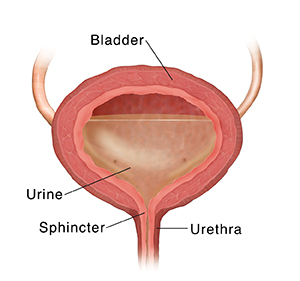
The lower part of the urinary tract has several parts.
-
The bladder stores urine until you’re ready to release it.
-
The urethra is the tube that carries urine from the bladder out of the body.
-
The sphincter is made up of muscles around the opening of the bladder. The sphincter muscles tighten to hold urine in the bladder. They relax to let urine flow. Signals from the brain tell the sphincter when to tighten and relax. These signals also tell the bladder when to contract to let urine flow out of the body.
Why you need a urodynamics study
You may need this test if you:
-
Leak urine (are incontinent)
-
Have a bladder that doesn't empty all the way.
-
Have symptoms such as the need to pee often or a constant strong need to pee
-
Have a urine stream that's weak or that stops and starts (intermittent)
-
Have persistent urinary tract infections
Getting ready for the study
-
Tell your healthcare provider about any medicines you’re taking. This includes prescription and over-the-counter medicines. It also includes any vitamins, herbs, or other supplements. Ask if you should stop them before the study.
-
Keep a diary of your bathroom habits. Do this for a few days before the study. This diary can be a helpful part of the evaluation.
-
Ask if you need to arrive for the study with a full bladder.
Online Medical Reviewer: Marc Greenstein MD
Online Medical Reviewer: Raymond Kent Turley BSN MSN RN
Online Medical Reviewer: Rita Sather RN
Date Last Reviewed: 03/01/2024
© 2000-2026 The StayWell Company, LLC. All rights reserved. This information is not intended as a substitute for professional medical care. Always follow your healthcare professional's instructions.