Management

Kidney Disease: Choosing the Right Protein for Your Body

Choose a preferred language

Eating the right kind and amount of protein is important when you have kidney disease. It helps keep you healthy and protects your kidneys.


Choosing the right amount of protein

If you have kidney disease but are not on dialysis, you may need to eat less protein. This can help slow down damage to your kidneys. Your doctor or dietitian will tell you how much protein you can eat. This depends on:

  • Your body weight

  • How bad your kidney disease is

  • How much protein is in your urine

  • How active you are each day

It is important to follow your doctor's plan.


How much protein can you eat?

The amount of protein you can eat may change over time. It depends on how well your kidneys are working. Your doctor will tell you how much protein to eat based on the stage of your kidney disease and your body weight. If you need to eat less protein, you may need more calories from other foods. Carbohydrates, like bread and pasta, are good choices. Write this down:

  • I can eat _____ grams of protein each day.

  • I should eat a total of _____ calories each day to maintain my body weight and muscle mass.


Choosing the right type of protein

When you have kidney failure, you need to eat less phosphorus. Many high-protein foods, like milk and cheese, have a lot of phosphorus.

Your protein choices may also depend on your culture, religion, or beliefs. For example, you may follow a vegetarian, vegan, kosher, or halal diet. Your dietitian and health care team can help you choose the right kind of protein and the right amount for you.
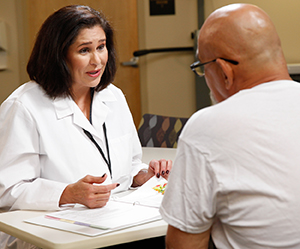

Patient talking to health care provider.

© 2000-2026 The StayWell Company, LLC. All rights reserved. This information is not intended as a substitute for professional medical care. Always follow your healthcare professional's instructions.

Start your journey toward better health

Select a primary care physician who will deliver personal care, close to home.

Find a Doctor

We have more than 4,500 specialty care physicians in our network

We have you covered from head (neurosurgery) to toe (podiatry.) And everything in-between!

Find a Doctor

Need Help?

Get the right care at the right time.

Learn More
Related Articles
Read article
Urology
Foley Catheter Care

A Foley catheter is a flexible plastic or rubber tube that is placed through the urethra (opening where urine comes out) and into the bladder. This helps drain urine from the bladder. There is a small balloon on the end of the tube that is inflated after insertion. This keeps the catheter from sliding out of the bladder.

Read article
Urology
Bladder: Training

Your Care InstructionsBladder training is used to treat urge incontinence and stress incontinence. Urge i...

Read article
Urology
Urostomy: Emptying Your Pouch

You'll need to empty your pouch when it gets to be about one-third full. The pouch is likely to become this full every 2 to 3 hours. To empty your pouch, follow the steps below.

Read article
Urology
Urostomy: Changing Your Pouch

You'll be shown how to change your pouch before you leave the hospital. Plan to change your pouch every few days. And change it early in the morning, when your urine output is less. Read on to learn how to change your pouch.