At times, friendly dogs and cats can bite and scratch. A pet bird, reptile, or hamster can also bite or scratch. Young children are at special risk. But you can help prevent problems around pets and other animals. Talk with your child about respecting animals, and model this behavior for them.
Signs of a potentially dangerous animal
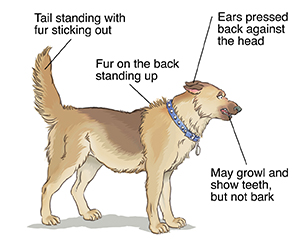
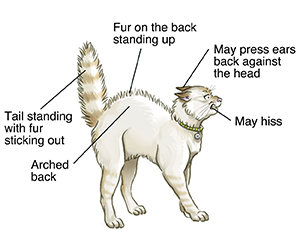
Precautions for parents and caregivers to take
-
Never leave a child alone with an animal, even the family pet.
-
Be sure that any pets that you own are fully vaccinated.
-
Correctly clean up after your pets.
-
Don't let your child take anything from an animal's mouth.
-
Have your child wash their hands after touching or handling an animal. Some animals can carry harmful germs that may cause your child to become sick.
-
Don't let your pet lick your child's face or any cuts or wounds.
-
Seek prompt medical treatment if your child has been bitten by a pet or wild animal.
-
Teach your children about animal safety early, and model the behavior.
What your child should know
Help your child become aware of animals. Tell your child:
-
Be gentle and treat all animals with respect.
-
Don't run away from a hostile or unknown animal. Keep your hands to your sides, don't look the animal in the eyes. Don't turn your back, but move away slowly, giving the animal plenty of space. Tell a parent or other adult about stray or threatening animals.
-
Stay away from strange animals, animals that seem sick or afraid, or animals with their young.
-
Never hide an animal bite. Bites can make you sick. Tell an adult right away.
-
Never go near a leashed dog unless the owner gives you permission.
-
Leave sleeping and eating pets alone!
-
Don't take a bone or toy away from an animal.
-
Never play biting or attacking games with a pet. Don't play roughly with animals.
-
Never touch or play with a wild snake. Snakes can bite. Some are poisonous. Others can quickly wrap around you to stop your breathing.
-
Wash your hands after touching or playing with a pet.
It’s exciting to see animals in the wild. But teach your child to leave them alone. Never feed wild animals. That can make them aggressive. Some wild animals can also carry rabies or other harmful diseases.
Featured in
Online Medical Reviewer: Liora C Adler MD
Online Medical Reviewer: Marianne Fraser MSN RN
Online Medical Reviewer: Stacey Wojcik MBA BSN RN
Date Last Reviewed: 10/01/2024
© 2000-2026 The StayWell Company, LLC. All rights reserved. This information is not intended as a substitute for professional medical care. Always follow your healthcare professional's instructions.

